From Kittelsen to Black Metal
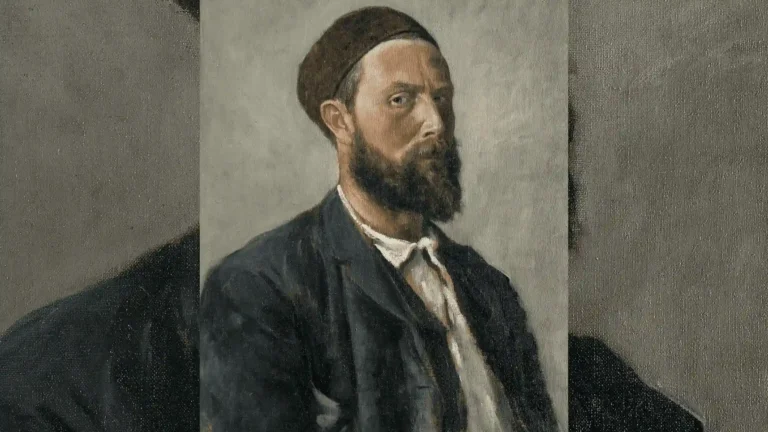
The connection between Theodor Kittelsen and black metal is much deeper than a few famous album covers. What links them is not only visual reference, but atmosphere, worldview, and emotional language. Decades before Norwegian black metal emerged, Kittelsen had already drawn a world of forests, spectral presences, mythic beings, plague, silence, and the sacred violence of nature. When black metal began shaping its own identity, it found in his work a visual grammar that felt uncannily complete.
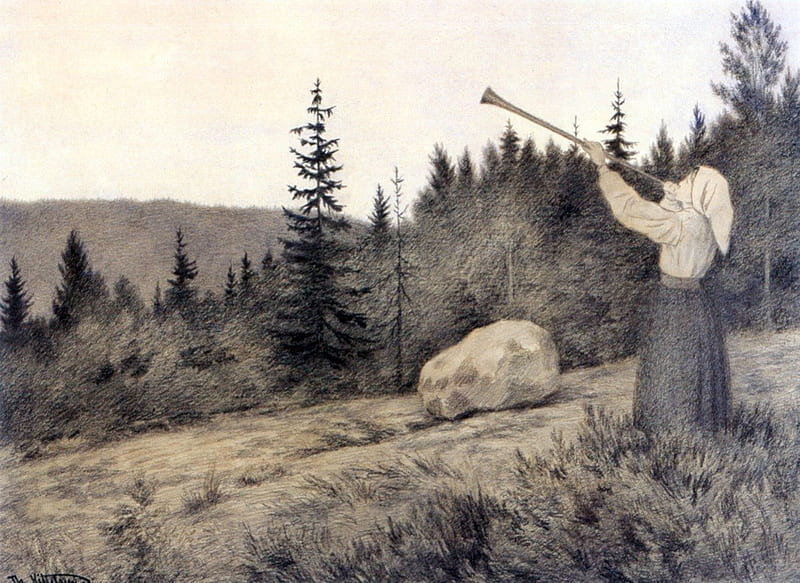
This connection becomes especially clear in the case of Burzum, where Kittelsen’s imagery was not used as ornament, but as part of the project’s inner climate. Works such as Fattigmannen and Op under fjeldet toner en lur did not simply decorate albums; they helped define the feeling those records transmitted. They suggested isolation, distance, memory, melancholy, and a sense of ancient presence. In that way, Kittelsen’s art became inseparable from the atmosphere black metal wanted to create with sound.
But the relationship goes beyond Burzum. Kittelsen’s imagery echoes through the wider black metal imagination because it captures something essential to the genre: the idea that nature is not neutral, that myth is not dead, and that darkness can function as cultural memory rather than mere provocation. His harsh contrasts, spectral figures, and landscapes charged with both beauty and threat offered black metal an alternative to modern design language. What the genre needed were images that felt inherited rather than manufactured, and Kittelsen provided exactly that.
This is especially visible in works related to Svartedauen (The Black Death), where Kittelsen transformed plague and fear into stark, unforgettable forms. In these images, horror is not sensationalist. It is quiet, patient, and deeply rooted in history and folklore. That quality made them especially powerful within black metal, where fear is often expressed not through excess, but through austerity, repetition, coldness, and the weight of atmosphere. The same visual economy that gives Svartedauen its power also helps explain why it still feels so modern.
In the end, black metal did more than borrow from Kittelsen. It also helped return him to the world in a new way. Through album covers, artwork, and the global circulation of the genre, many listeners encountered his vision before they even knew his name. That movement gave his work a second life beyond the museum and the printed page. And perhaps that is the strongest proof of all: Kittelsen’s images still live because they continue to summon the same things they always did — solitude, myth, tension, wonder, and the feeling that the landscape is never truly empty.