Why Theodor Kittelsen Still Matters
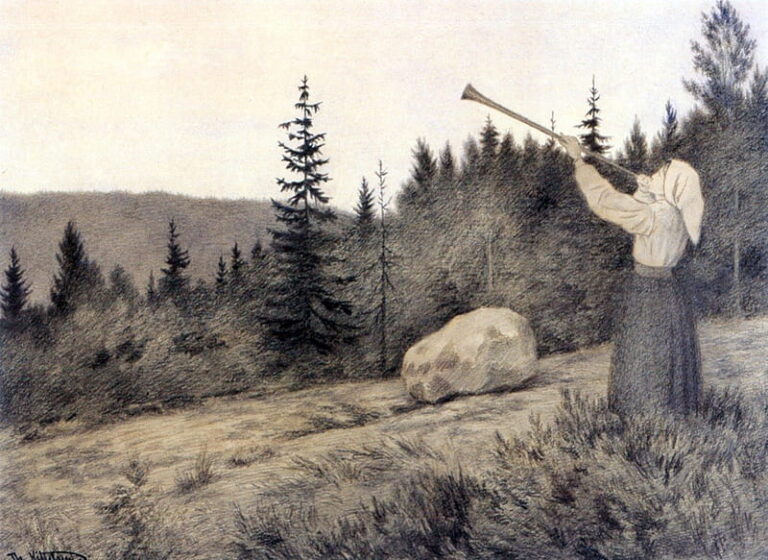
Theodor Kittelsen remains one of the most singular and haunting figures in Norwegian art. More than an illustrator, he was an artist of atmosphere: someone capable of turning landscape, silence, folklore, and fear into a visual language that still feels alive today. His work does not simply depict trolls, forests, lakes, or supernatural presences as decorative fantasy. Instead, it suggests that these things were always there, hidden inside the land itself, waiting to be seen.
That is one of the reasons Kittelsen continues to resonate so strongly in the present. His images do not belong only to the nineteenth century, nor only to museum walls or art books. They still speak to modern eyes because they are built from tensions that remain powerful: beauty and menace, stillness and unease, nature and myth, solitude and revelation. In Kittelsen, the landscape is never just a backdrop. It breathes, watches, remembers.
A key part of his enduring power lies in the way he blurs the border between the visible and the invisible. His creatures do not appear as intruders from another realm. They emerge from the environment itself, as if stone, moss, water, fog, and shadow had suddenly chosen to reveal their inner face. This makes his imagery feel less like fantasy in the conventional sense and more like a deepening of reality. The world becomes stranger, not because it changes, but because Kittelsen teaches us to look at it differently.
That sensibility also helps explain why his work later found such a strong afterlife in black metal. Long before the genre took shape, Kittelsen had already created a universe of cold, silence, darkness, mythology, and spiritual tension. His art offered exactly the kind of visual atmosphere that black metal would one day need: not polished design, but something older, harsher, and more elemental. In that sense, Kittelsen did not merely influence a later culture. He anticipated its emotional landscape.